
When it comes to construction, there is no such thing as a sustainable structure without a solid base. In soft clay, organic soil and low bearing capacity sites, roads, factories, ports, airport and urban developments heavily rely on ground improvement as a critical prerequisite.
In this context, Cement Deep Mixing (CDM) technology is becoming more and more popular in Vietnam. Twenty-five years of experience is being replaced by 2020-2030, a transition from a construction approach that is operator-driven, to a more measurable, data-driven and intelligent ground improvement system.
What is CDM?
CDM (Cement Deep Mixing) is a ground improvement method in which cement or other binders are introduced into the soil and mechanically mixed using a specialized drilling and mixing tool.

After hydration, the soil-binder mixture forms soil-cement columns with higher strength and stiffness, helping to increase bearing capacity, reduce settlement, and improve overall ground stability. According to the Federal Highway Administration, the performance of deep-mixed soil depends on several factors, including soil conditions, binder type and dosage, water content, construction equipment, operating parameters, and curing conditions (Bruce et al., 2013). This means CDM is far more than simply drilling into the ground and injecting cement. It is an integrated system combining geotechnical engineering, mechanical engineering, construction materials, and quality control. At the heart of this system is the CDM mixing head, which directly cuts the soil, distributes the slurry, and controls the uniformity of the soil-cement mixture.
2020-2023: The Era of Power and Productivity
During the early 2020s, CDM equipment was commonly evaluated based on motor power, torque, drilling depth, column diameter, and construction speed.
The prevailing expectation was straightforward: higher power and faster drilling meant greater productivity. However, field experience shows that a powerful machine does not automatically produce a high-quality soil-cement column. If penetration speed is too high, mixing cycles are insufficient, or slurry distribution is uneven, weak or non-uniform sections may still form within the column. Research by Zuo et al. (2023) demonstrated that the quality of field-constructed deep mixing columns can differ substantially from laboratory-mixed specimens. Improvements in penetration and withdrawal speed, mixing cycles, and blade configuration can significantly enhance column uniformity.
Assessment: During this stage, CDM firmly established its value as a soft-ground improvement solution, although construction quality still depended heavily on equipment performance, operating procedures, and contractor experience.
2024-2026: From Mechanical Equipment to Data-Driven Control
From the mid-2020s onward, CDM systems have increasingly incorporated sensors and digital monitoring technologies.
Modern systems can monitor parameters such as:
- Drilling depth;
- Penetration and withdrawal speed;
- Rotational speed;
- Torque;
- Slurry flow and pressure;
- Total binder consumption.
The key change is that quality control no longer has to begin only after construction is completed. Engineers can detect abnormal operating conditions during drilling and make adjustments while the column is still being formed. Sensors alone, however, do not guarantee quality. Data must be properly calibrated, interpreted, and verified against field testing and strength results.
Assessment: CDM is evolving from conventional mechanical equipment into a measurable and traceable construction system.
Viet Sinh’s Journey Toward a Made-in-Vietnam CDM Mixing Head
The development of CDM technology in Vietnam has not depended solely on imported machinery. Behind locally manufactured equipment lies a long process of studying, testing, modifying, and learning directly from construction sites.
At Viet Sinh, the founder and engineering team spent years studying the behavior of CDM equipment under Vietnamese ground conditions. The process involved repeated questions: Why does one blade configuration perform well in one soil but not another? Why do certain components wear prematurely? Why can slurry distribution become uneven? How can a mixing head be made easier to maintain under actual site conditions?
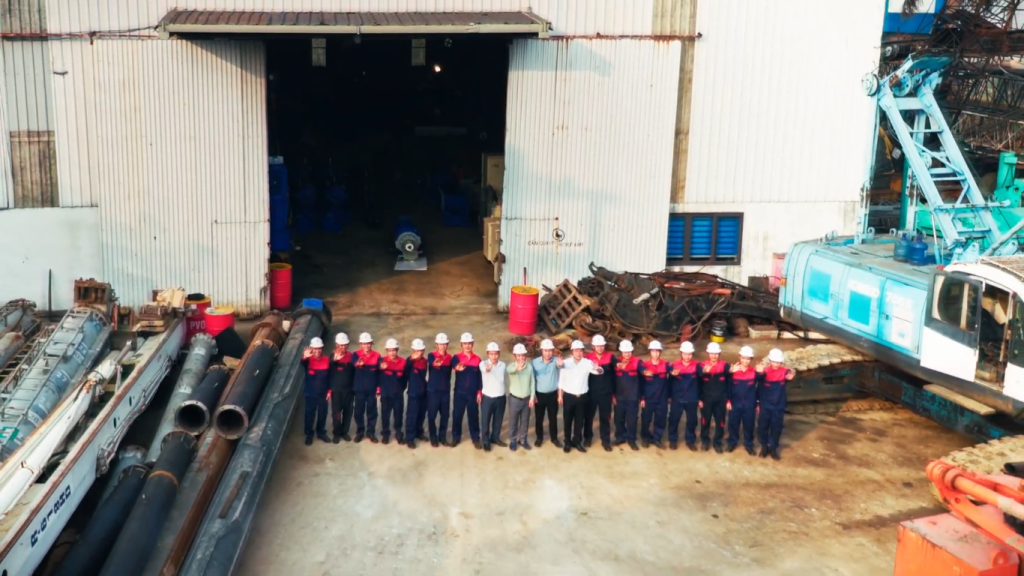
Some components had to be manufactured, tested, modified, and manufactured again. Certain structural weaknesses only became apparent after the equipment had operated under real loads. There were setbacks, failed prototypes, and repeated redesigns — but the development process never stopped.
Through years of accumulated field experience, successive generations of Made-in-Vietnam CDM mixing heads bearing Viet Sinh’s engineering footprint gradually took shape. Their value lies not only in domestic manufacturing, but also in a deeper understanding of local ground conditions, faster spare-part availability, easier maintenance, and the ability to continuously improve the equipment based on real construction feedback.
2027-2030: Adaptive and Intelligent Construction
CDM is predicted to take another step toward adaptive construction between 2027 and 2030. Future systems may actually adapt their drilling speed and binder amount depending on soil variability over the column’s depth, rather than applying the same amount of binder and drilling speed all the way down. Changes in torque, motor current, penetration resistance and pressure may give some indication of changes in subsurface conditions.
In recent years, the research has been on the development of the deep mixing equipment with digitally controlled system, which can monitor and automatically adjust the construction parameters in real time in accordance with the pre-designed soil layers (Du et al., 2025). In the future, each soil-cement column may have a digital construction record attached to it, showing things like the depth it has sunk to, how fast it drills, how much torque is applied and how much slurry is used. In other words, contractors will no longer be delivering just a column under the ground; they will also be delivering the data in the form of information about how that column was built.
Assessment: CDM is becoming an intelligent ground improvement technology where the quality can be measured, traced and optimised more and more.
The Role of CDM in Vietnam’s Future
For people, CDM contributes to safer infrastructure by reducing settlement, ground deformation, and foundation-related risks affecting homes, factories, schools, hospitals, roads, and other facilities.
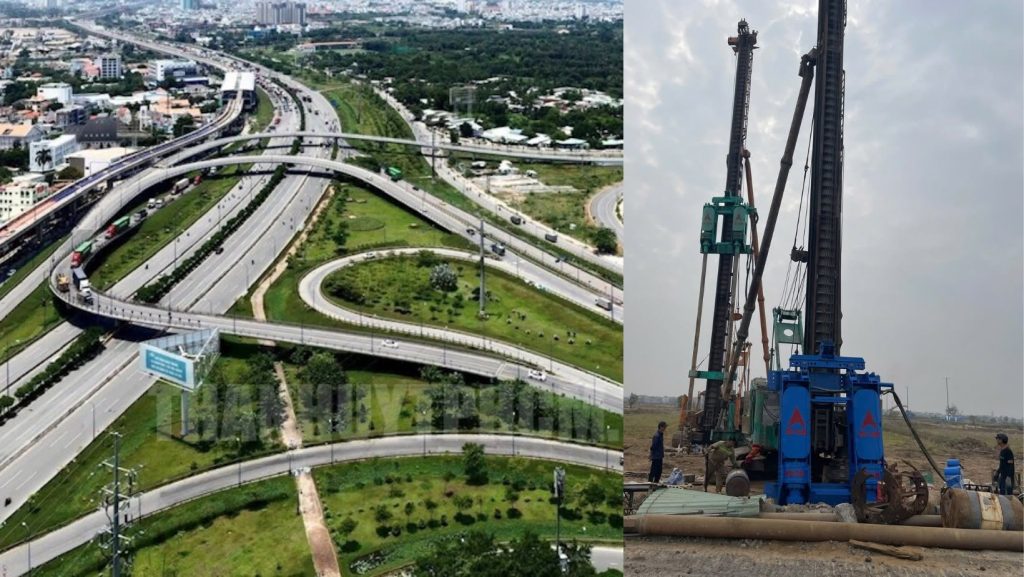
For the economy, effective ground improvement can accelerate construction schedules, reduce long-term settlement risks, and minimize costly foundation repairs.
For Vietnam, the importance is even greater.
Many major transport, industrial, port, and urban projects are being developed in regions characterized by soft ground conditions. As infrastructure development expands, ground improvement will become an increasingly important part of the construction process. At the same time, developing CDM mixing heads, machinery, spare parts, and maintenance capabilities domestically can reduce dependence on imported equipment and strengthen Vietnam’s mechanical and geotechnical engineering industries.